Lifecycle and maintenance planning

30-Year Maintainability

A 30-year shelter plan is a maintenance lifecycle: corrosion control, cathodic protection concepts, waterproofing inspection, pump testing, generator exercising, fuel testing, battery cycles, filter replacement, sensor calibration, spares, drills, and documentation.

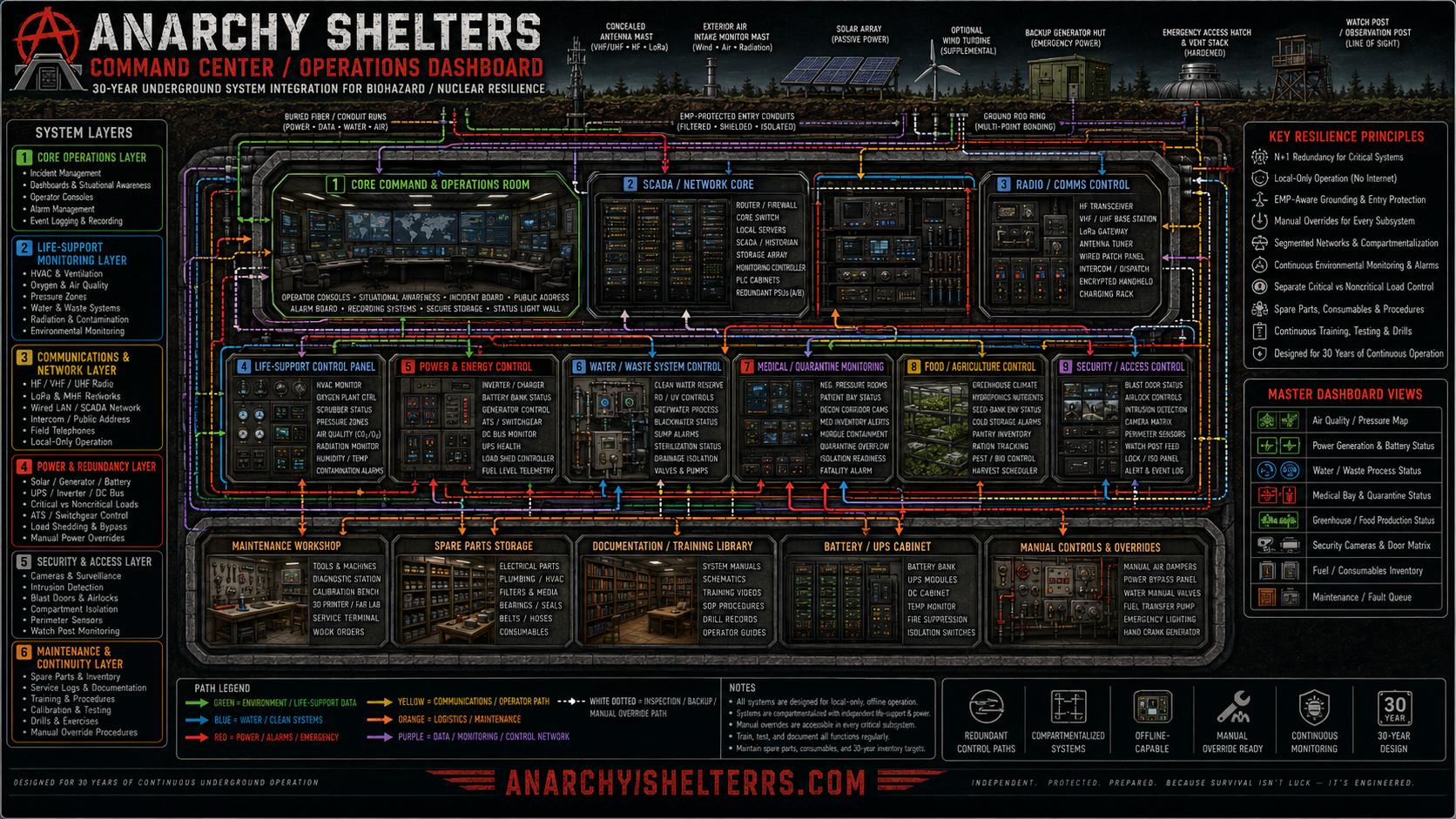
Command and maintenance dashboard schematic showing inspection and support areas
30-year maintainability is managed through inspection schedules, spares, documentation, training, logs, calibration, and recurring recommissioning rather than install-and-ignore assumptions. Click the image to inspect it full screen.

Dashboard concept / planning layer

System Role Planning Model
Control Mode Local-First
Review Boundary Professional Required
Fallback Priority Manual / Documented

30-year planning is not install and ignore

A long-duration shelter must be treated like critical infrastructure with recurring inspection, replacement, testing, and documentation.

  • Monthly, quarterly, annual, and multi-year maintenance calendars.
  • Inspection logs, vendor records, warranties, manuals, drawings, commissioning records, and operator binders.
  • Training and drills so the system can be operated by more than one person.

Corrosion and water management

Subsurface structures and utilities fail quietly when corrosion and water are ignored.

  • Corrosion control, cathodic protection concepts, waterproofing inspection, drainage checks, sump testing, and seal inspection.
  • Pump testing, backflow device checks, valve exercise, and sensor verification.
  • Photo records and inspection notes tied to locations and dates.

Power, fuel, air, and filters

Mechanical systems need exercise and consumables need rotation.

  • Generator exercising, fuel testing/polishing, water separation, stabilization, and filter replacement.
  • Battery replacement cycles, UPS health, inverter checks, charge-controller reviews, and load-bank concepts where appropriate.
  • NBC filters, prefilters, HEPA stages, carbon media, pressure gauges, CO2 sensors, and calibration records.

Spares and manual tools

Maintenance planning must assume supply chains may be unavailable.

  • Spare parts inventory, manual tools, PPE, seals, belts, fuses, sensors, cartridges, lubricants, and labeled bins.
  • Paper procedures and manual overrides for essential systems.
  • Recommissioning after long idle periods or any major equipment change.

Confidential planning path

Need help mapping this system?

Start with a confidential systems assessment and identify the risks, dependencies, and maintenance requirements before selecting equipment.

Get a Custom Quote

Key planning questions

Questions to answer before design or procurement.

  1. What must be inspected monthly?
  2. What must be tested quarterly?
  3. What has a five-year replacement cycle?
  4. What can fail silently?
  5. What spare parts, tools, and documents are stored on site?
Planning and professional-review note

Information on this site is for planning and education. Underground shelters, electrical systems, ventilation, fuel storage, NBC filtration, EMP protection, water systems, waste systems, medical spaces, and life-safety systems require qualified professional design, permitting, installation, inspection, testing, and maintenance.

Maintenance calendar, corrosion control, waterproofing inspection, pump testing, generator exercising, fuel testing, battery cycles, filters, sensors, spares, tools, and drills.

Confidential first-contact systems assessment

Create a 30-year maintenance map

Share installed systems, known maintenance intervals, spare parts, vendor records, expected occupancy, inspection responsibilities, and what must be tested monthly, quarterly, and annually.

Minimal information first. Your request has been received. We review shelter type, project phase, lawful-use requirements, communications needs, power constraints, and site-safety factors before recommending a path.
Desired systems