Wilderness Bushcraft Shelters
Wilderness Bushcraft Shelter Blueprint
A responsible field-shelter planning blueprint for A-frame, lean-to, tarp, cordage, windbreak, and safe-siting decisions.
Overview
Short-duration outdoor emergency shelter education and non-permanent field shelter planning.
Best use cases
Exposure, storm, travel interruption, lost-party shelter, remote worksite interruption, and outdoor emergency planning.
Site and environment considerations
Forest transition zones on dry ground away from flood plains, deadfall, avalanche paths, and unstable slopes.
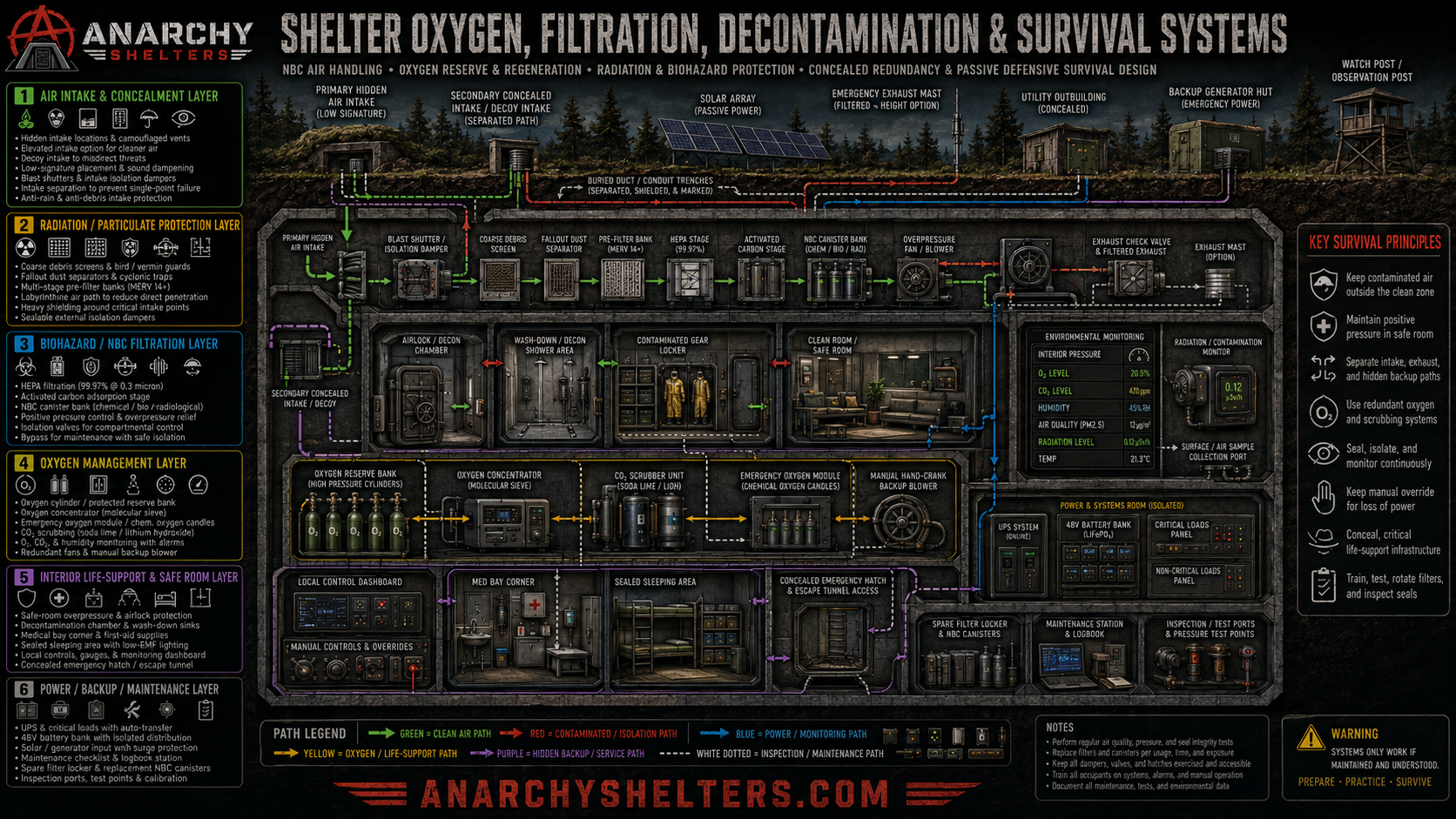
Critical systems required
Interactive markers
Focus or hover any marker to understand the component.
Dynamic bill of materials
Grouped supply and system planning table.
Rows are mapped to categories that can resolve to WooCommerce product categories when available. Otherwise they stay commerce-ready for later product mapping.
Field shelter
| Item | Priority | Purpose | Quantity / Duration | Supplies | Notes |
|---|---|---|---|---|---|
| Tarp or emergency shelter cover | Critical | Creates immediate wind and rain protection. | One per person or small team Short-term field use |
View Recommended Supplies | Use responsibly without damaging land. |
| Cordage and cutting tool category | High | Supports safe setup, repairs, and emergency improvisation. | One kit per field bag Inspect before trips |
View Recommended Supplies | Know local laws and safe tool handling. |
Water
| Item | Priority | Purpose | Quantity / Duration | Supplies | Notes |
|---|---|---|---|---|---|
| Potable water storage plan | Critical | Defines safe stored water and access when pumps or grid pressure fail. | Based on people, days, climate, and hygiene plan Rotate and test regularly |
View Recommended Supplies |
Separate potable and non-potable paths. Stored water can become unsafe without treatment and monitoring.
|
| Water purification and testing kit | Critical | Supports source water evaluation and treatment before use. | Primary plus backup method Maintain spares and test media |
View Recommended Supplies |
Use multiple barriers where possible. Do not assume clear water is safe.
|
| Manual pump or gravity fallback | High | Allows controlled water access during power loss. | One fallback path per critical water source Maintain and exercise |
View Recommended Supplies | Document operation with labels. |
Lighting
| Item | Priority | Purpose | Quantity / Duration | Supplies | Notes |
|---|---|---|---|---|---|
| Low-power LED and task lighting | High | Maintains safe movement, maintenance, and medical work under low power. | By zone and task Entire sheltering period |
View Recommended Supplies | Include red/night mode where useful. |
| Headlamps and spare batteries | High | Keeps hands free during inspections and repairs. | One per occupant plus spares Rotate batteries |
View Recommended Supplies | Store where reachable in darkness. |
Communications
| Item | Priority | Purpose | Quantity / Duration | Supplies | Notes |
|---|---|---|---|---|---|
| Hand-crank / battery radio category | High | Receives local alerts when internet and cellular networks fail. | One primary plus spare power Test monthly |
View Recommended Supplies |
Keep printed local frequency and alert notes. Follow all applicable radio rules.
|
| LoRa-style telemetry / local sensor mesh concept | Medium | Supports short status messages and sensor visibility without cloud dependency. | Project-specific Maintain batteries and node map |
View Recommended Supplies |
Use for short messages, alerts, and telemetry, not voice or broadband. Radio compliance varies by jurisdiction.
|
| Printed contact plan and message templates | High | Provides fallback if electronics fail. | One copy per operator location Update regularly |
View Recommended Supplies | Include meeting points, status phrases, and authority alert sources. |
Recommended supplies
Wilderness Shelter Kit
Cold Weather Survival
Thermal layers, bivy sacks, snow tools, vapor management, emergency blankets, and hypothermia-prevention planning.
Open supply categoryShelter Tools
Maintenance tools, inspection kits, fasteners, sealing supplies, labels, spare parts, and manual override support.
Open supply categoryWater Purification
Storage, prefilters, purification, testing, pumps, backflow prevention, greywater separation, and emergency taps.
Open supply categoryLighting
Low-power lighting, headlamps, emergency lighting, charging, batteries, night markers, and task lights.
Open supply categoryCommunications
Hand-crank radios, local mesh concepts, LoRa-style telemetry, spare batteries, antennas, printed maps, and message templates.
Open supply categoryFamily Emergency Kit
Layered essentials for air, water, food, heat, lighting, first aid, communications, sanitation, documents, and morale.
Open supply categoryMaintenance notes
Field shelters are not substitutes for engineered underground structures and should avoid damaging public or private land.
Safety notes
Avoid unsafe trees, flooding, unstable ground, open flame hazards, and illegal land use.
Blueprint FAQ
Questions to ask before buying supplies or locking a design.
Can I buy everything in this blueprint as one cart?
If WooCommerce bundles or mapped product categories are configured, the site can point to product categories or future bundle flows. Without WooCommerce, the page shows recommended supplies and a systems assessment path instead of fake checkout.
Is this a construction plan?
No. It is a planning and procurement map. Final construction, excavation, air, electrical, fuel, water, waste, and life-safety systems require qualified professionals.
How should I use the BOM?
Use it as a dependency checklist. Confirm what each system needs, what depends on power, what requires maintenance, and what needs professional review.
What is the most important system?
Air, water, power, waste, medical, communications, and monitoring all interact. The important step is mapping dependencies before the shell or equipment package is locked in.