Medical and infection-control planning

Medical / Quarantine Bay

Isolation bay planning, clean/transition/contaminated zones, PPE storage, pressure considerations, medical storage, basic triage, waste handling, decontamination, and command-center integration.

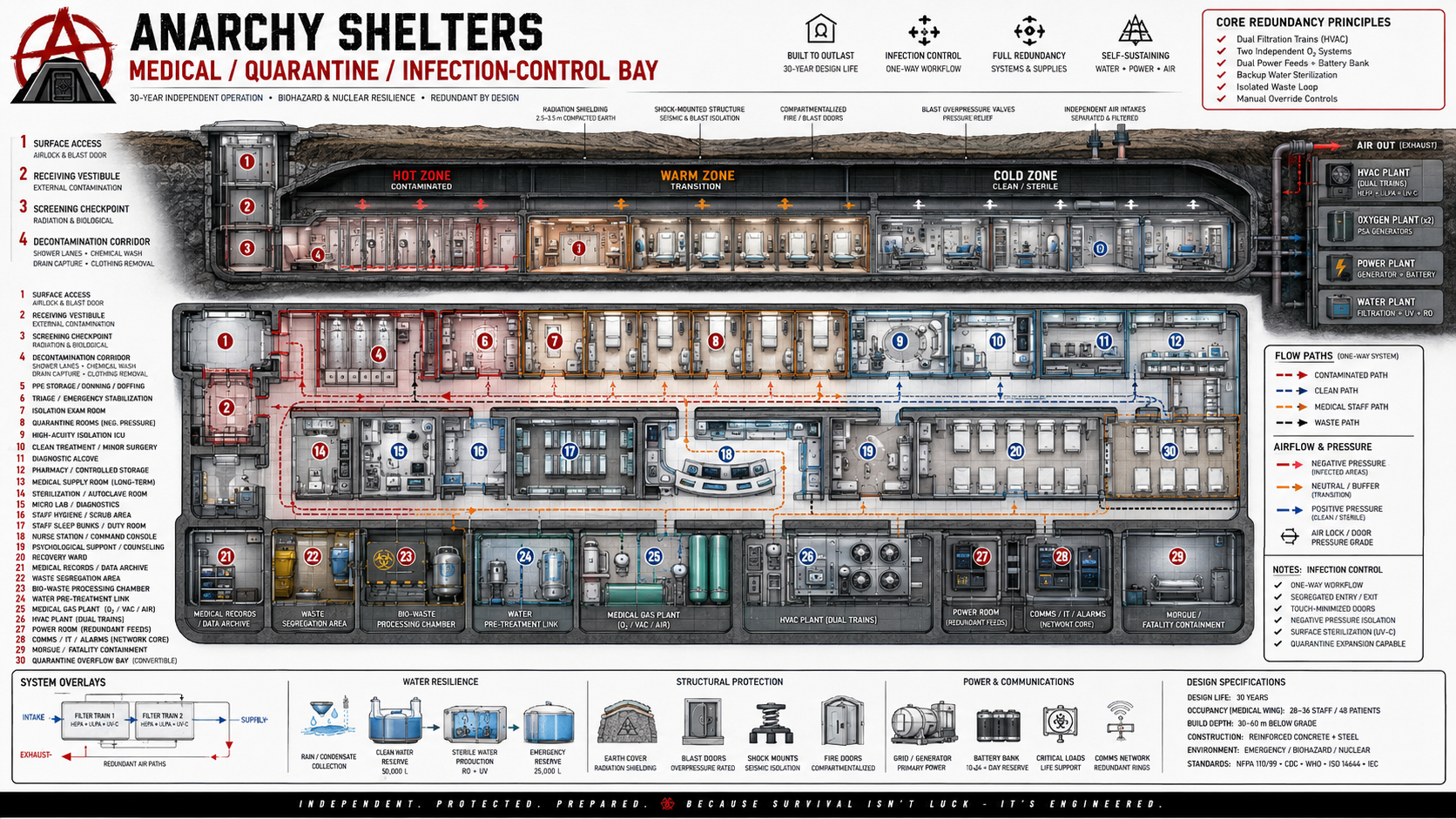
Medical quarantine infection-control bay schematic for underground shelter systems
The medical and quarantine schematic shows hot, warm, and cold zones, decontamination workflow, treatment areas, isolation rooms, sterilization, waste, medical gas, power, and communications. Click the image to inspect it full screen.

Dashboard concept / planning layer

System Role Planning Model
Control Mode Local-First
Review Boundary Professional Required
Fallback Priority Manual / Documented

Isolation and workflow

Medical resilience depends on controlled movement between contaminated, transition, and clean zones.

  • Receiving or screening area, decontamination path, isolation bay, and clean treatment space.
  • PPE storage, donning/doffing support, handwashing, sanitation, and waste separation.
  • Communications with the command center so medical status is visible without cross-traffic.

Pressure and environmental considerations

Pressure strategy depends on design intent and professional review.

  • Negative or positive pressure considerations depending on whether the goal is protecting the shelter, protecting the patient, or both.
  • Redundant lighting, battery-backed power, local environmental monitoring, and clear manual procedures.
  • Waste handling, air filtration interface, and contamination-control boundaries.

Triage and storage

A shelter medical area should be honest about its scope.

  • Basic triage, medication storage, refrigeration if applicable, first-aid supplies, PPE, linens, and cleaning supplies.
  • Inventory controls and expiration tracking for medical and sanitation supplies.
  • Telemedicine or communications support where appropriate, without assuming external connectivity will exist.

Professional and human limits

This does not replace medical facility design or clinical guidance. Medical spaces require professional review.

  • Long-duration psychological strain, privacy, fatigue, isolation stress, and morale should be part of planning.
  • Clinical protocols, controlled substances, medical gas, infection control, and waste handling require appropriate professionals.
  • The goal is resilience planning, not pretending a bunker room becomes a hospital automatically.

Confidential planning path

Need help mapping this system?

Start with a confidential systems assessment and identify the risks, dependencies, and maintenance requirements before selecting equipment.

Get a Custom Quote

Key planning questions

Questions to answer before design or procurement.

  1. What level of medical capability is realistic?
  2. How are clean, transition, and contaminated zones separated?
  3. What PPE and sanitation supplies are stored?
  4. What pressure strategy is professionally reviewed?
  5. How does the bay communicate with command during isolation?
Planning and professional-review note

Information on this site is for planning and education. Underground shelters, electrical systems, ventilation, fuel storage, NBC filtration, EMP protection, water systems, waste systems, medical spaces, and life-safety systems require qualified professional design, permitting, installation, inspection, testing, and maintenance.

Isolation bay, infection-control workflow, clean and contaminated zones, PPE, pressure considerations, medical storage, triage, waste, and sanitation.

Confidential first-contact systems assessment

Plan a quarantine and medical resilience zone

Share occupancy, medical capability expectations, isolation needs, PPE/storage requirements, pressure-zone goals, sanitation design, and whether professional clinical review is involved.

Minimal information first. Your request has been received. We review shelter type, project phase, lawful-use requirements, communications needs, power constraints, and site-safety factors before recommending a path.
Desired systems