
EMP-resilient planning

EMP-Resilient Systems

Shielded systems planning, Faraday-aware infrastructure, protected electronics strategy, bonding and grounding concepts, cable entry protection, fiber options, and local-only fallback.

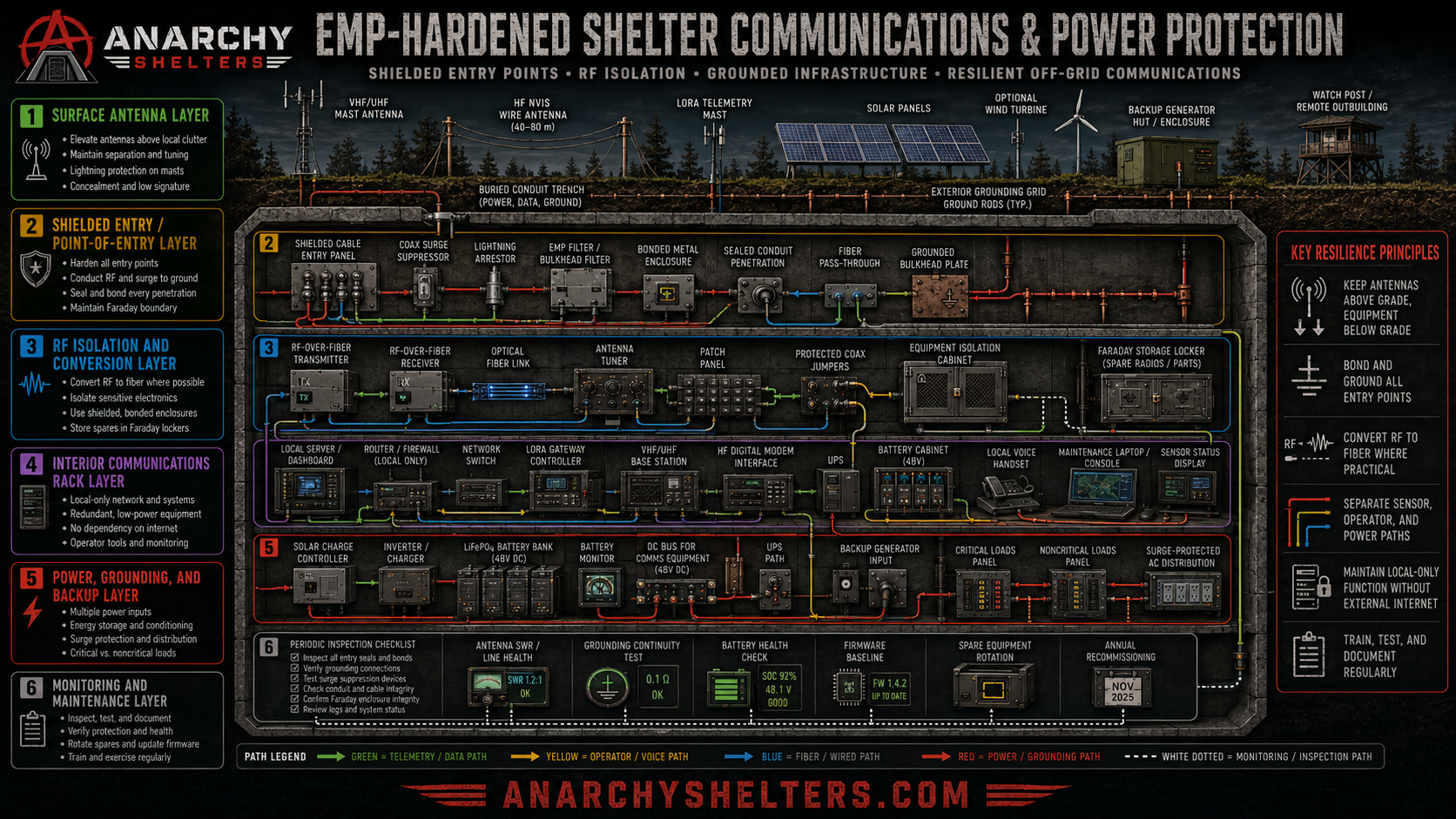
EMP-resilient communications and power protection schematic for a shelter
This schematic illustrates EMP hardening considerations: shielded entry points, RF isolation, grounded infrastructure, protected communications racks, spare electronics storage, and inspection routines. Click the image to inspect it full screen.

Dashboard concept / planning layer

System Role Planning Model
Control Mode Local-First
Review Boundary Professional Required
Fallback Priority Manual / Documented

Why EMP-resilient planning is not enough

EMP-resilient planning is weak wording. A serious plan uses defensible language such as EMP-resilient planning, EMP hardening considerations, shielded systems planning, and protected electronics strategy.

  • Identify what must keep working locally without internet or grid support.
  • Separate design goals from verified compliance claims.
  • Avoid claiming MIL-STD, HEMP, or certified hardening without documented testing and verification.

Shielded equipment and entry planning

Many failures occur at the boundary where outside conductors enter the protected area.

  • Shielded equipment zones, cable entry protection, surge protection, bonding and grounding planning.
  • Fiber where practical to reduce conductive pathways into protected electronics.
  • Shielded command-room considerations, protected racks, and Faraday-aware spare storage.

Local-only fallback and manual override

If electronics fail, the shelter still needs a way to operate essential systems.

  • Local-only control fallback that does not depend on cloud services.
  • Manual override strategy for doors, dampers, pumps, lighting, and power transfer where appropriate.
  • Spare electronics inventory with labels, storage procedures, and replacement documentation.

Reference standard realism

Military standards such as MIL-STD-188-125-1 show the level of rigor involved in serious HEMP protection, but actual compliance requires professional testing and verification.

  • Use standards as reference points for planning conversations, not marketing claims.
  • Require qualified review for shielding, bonding, penetration treatment, and test protocols.
  • Document what is a planning goal, what is installed, and what has been verified.

Confidential planning path

Need help mapping this system?

Start with a confidential systems assessment and identify the risks, dependencies, and maintenance requirements before selecting equipment.

Get a Custom Quote

Key planning questions

Questions to answer before design or procurement.

  1. What systems must work after an electrical transient or grid failure?
  2. Which cables, antennas, and power feeds cross the protected boundary?
  3. Where can fiber replace copper?
  4. What spare electronics are stored on site?
  5. Which functions have mechanical or manual fallbacks?
Planning and professional-review note

Information on this site is for planning and education. Underground shelters, electrical systems, ventilation, fuel storage, NBC filtration, EMP protection, water systems, waste systems, medical spaces, and life-safety systems require qualified professional design, permitting, installation, inspection, testing, and maintenance.

EMP-resilient planning, shielded systems planning, protected electronics strategy, Faraday-aware infrastructure, and local-only fallback.

Confidential first-contact systems assessment

Review EMP-resilient planning

Describe exposed conductors, antenna paths, power feeds, command-room equipment, spare electronics, grounding assumptions, and the degree of professional testing expected.

Minimal information first. Your request has been received. We review shelter type, project phase, lawful-use requirements, communications needs, power constraints, and site-safety factors before recommending a path.
Desired systems