Water, sanitation, and waste loops

Water and Waste Systems

Planning for potable water storage, filtration, pumps, manual access, greywater, blackwater, waste isolation, long-term sanitation, backflow prevention, and monitoring.

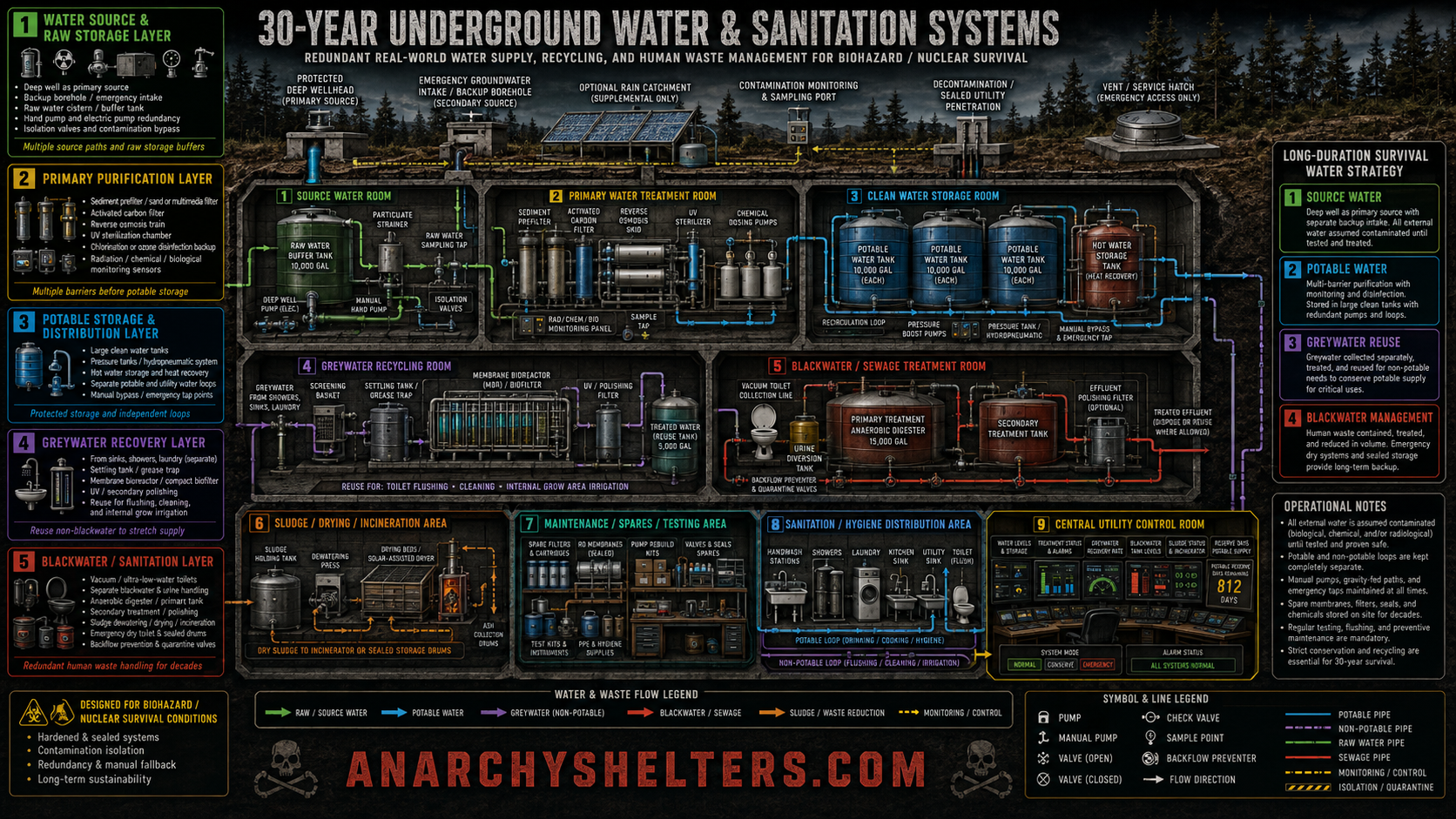
30-year underground water and sanitation systems schematic
The water and sanitation schematic maps raw water, treatment, potable storage, greywater recovery, blackwater management, sludge reduction, hygiene distribution, and utility controls. Click the image to inspect it full screen.

Dashboard concept / planning layer

System Role Planning Model
Control Mode Local-First
Review Boundary Professional Required
Fallback Priority Manual / Documented

Potable water and treatment

Water planning should assume outside water may be contaminated until tested and treated.

  • Raw-water storage, prefiltration, carbon filtration, UV or other treatment concepts, and potable storage.
  • Redundant pumps, pressure management, manual water access, and protected distribution loops.
  • Tank levels, flow sensors, water-quality checks, and maintenance logs.

Greywater and blackwater separation

Reuse can stretch resources, but it must not compromise clean water.

  • Separate greywater collection, treatment, and non-potable reuse where appropriate.
  • Blackwater isolation, sewage treatment concepts, waste storage, and emergency containment.
  • Backflow prevention and clearly labeled potable versus non-potable loops.

Infection-control connection

Water and waste systems are part of medical and quarantine safety.

  • Handwashing, showers, laundry, decontamination, kitchen sanitation, and medical waste workflow.
  • Isolation valves and quarantine routing for contamination events.
  • Waste-handling procedures that prevent hygiene failure during extended sheltering.

Maintenance access

Sanitation systems need maintainability, not hidden pipes no one can reach.

  • Service clearances, spare pumps, seals, filters, valves, and test points.
  • Regular flushing, inspection, and documentation schedules.
  • Manual procedures for pump failure, tank alarm, backflow event, or treatment outage.

Confidential planning path

Need help mapping this system?

Start with a confidential systems assessment and identify the risks, dependencies, and maintenance requirements before selecting equipment.

Get a Custom Quote

Key planning questions

Questions to answer before design or procurement.

  1. How much potable water must be stored?
  2. What is the backup water source?
  3. What happens if pumps fail?
  4. How are greywater and blackwater separated?
  5. Where are filters, valves, pumps, and backflow preventers inspected?
Planning and professional-review note

Information on this site is for planning and education. Underground shelters, electrical systems, ventilation, fuel storage, NBC filtration, EMP protection, water systems, waste systems, medical spaces, and life-safety systems require qualified professional design, permitting, installation, inspection, testing, and maintenance.

Potable water, filtration, pumps, manual access, greywater, blackwater, waste isolation, sanitation, backflow prevention, and monitoring.

Confidential first-contact systems assessment

Assess water and sanitation resilience

Share water-source assumptions, storage targets, occupancy, waste strategy, manual water access, reuse goals, and hygiene requirements.

Minimal information first. Your request has been received. We review shelter type, project phase, lawful-use requirements, communications needs, power constraints, and site-safety factors before recommending a path.
Desired systems